


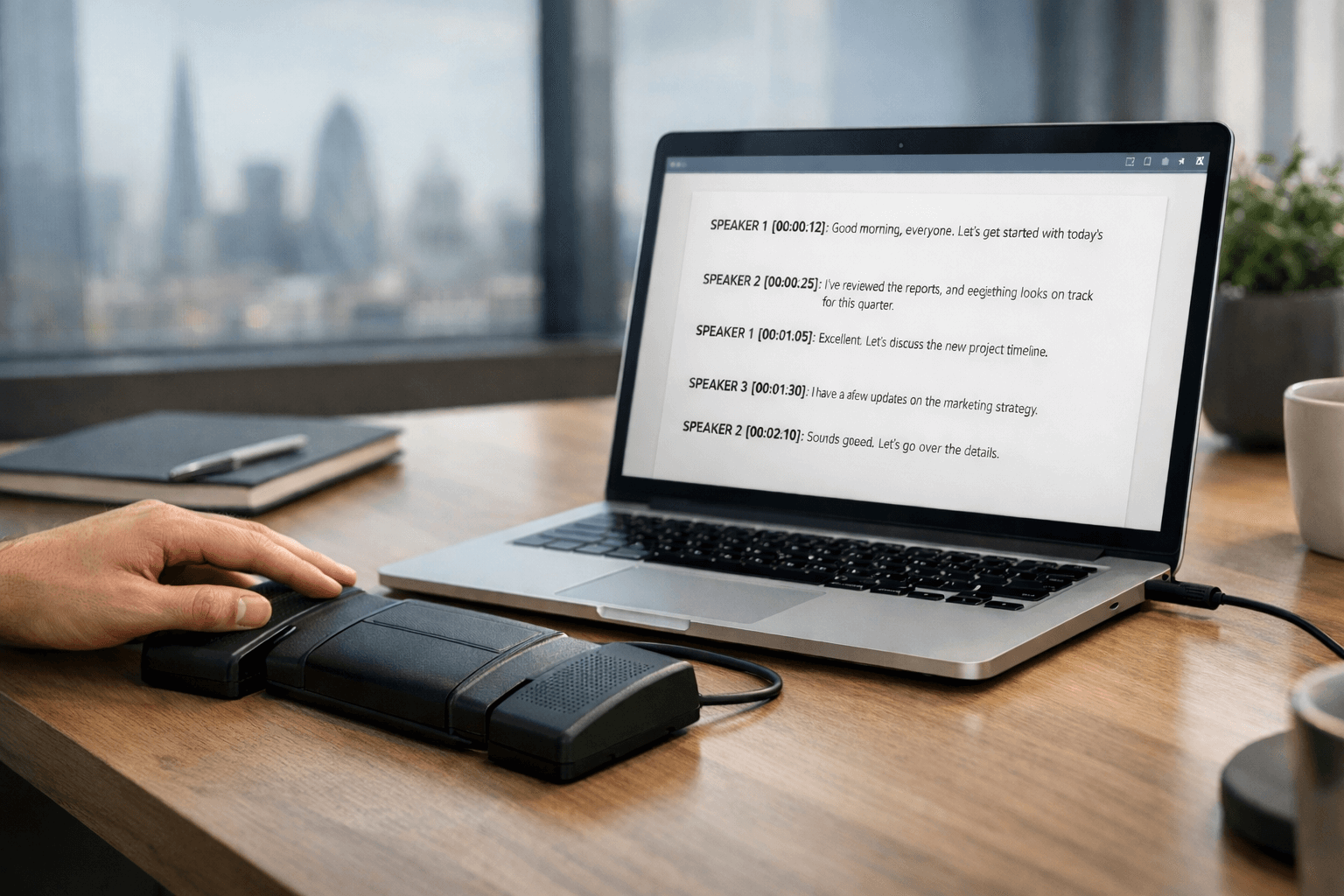
Transcribing jobs are paid roles where you listen to audio (or watch video) and turn it into accurate written text. That might mean typing up a podcast interview, producing minutes from a board meeting, writing out a medical dictation, or preparing a court transcript.
If you’re searching what are transcribing jobs, you probably want three things quickly:
- what the work actually involves (and which type suits you)
- how people get paid (and what’s realistic in the UK)
- how to start without falling for scams
This guide covers all of that—plus the route for anyone asking how to become a court transcriber and how to become a transcriber in UK.
What transcribing jobs involve
At its core, transcription is a workflow:
- Receive audio/video (a file, a secure link, or a platform task)
- Listen carefully (often in short loops)
- Type what’s said (verbatim or clean/edited)
- Format and label (speaker names, timestamps, sections)
- Proofread (accuracy, spelling, consistency)
- Deliver securely (email, portal, or client system)
Common transcription styles you’ll see
- Verbatim transcription: every word, false start, filler (“um”), and repetition (used in legal, research, investigations).
- Clean verbatim: removes fillers and obvious repeats while keeping meaning.
- Edited transcription / summary: condenses or rewrites for readability (meeting notes, internal memos).
- Time-stamped transcription: adds timestamps (for editing teams, legal review, subtitles).
If you want a feel for how professional outputs are structured, browse examples of transcription services deliverables and formatting expectations.
Types of transcribing jobs in the UK
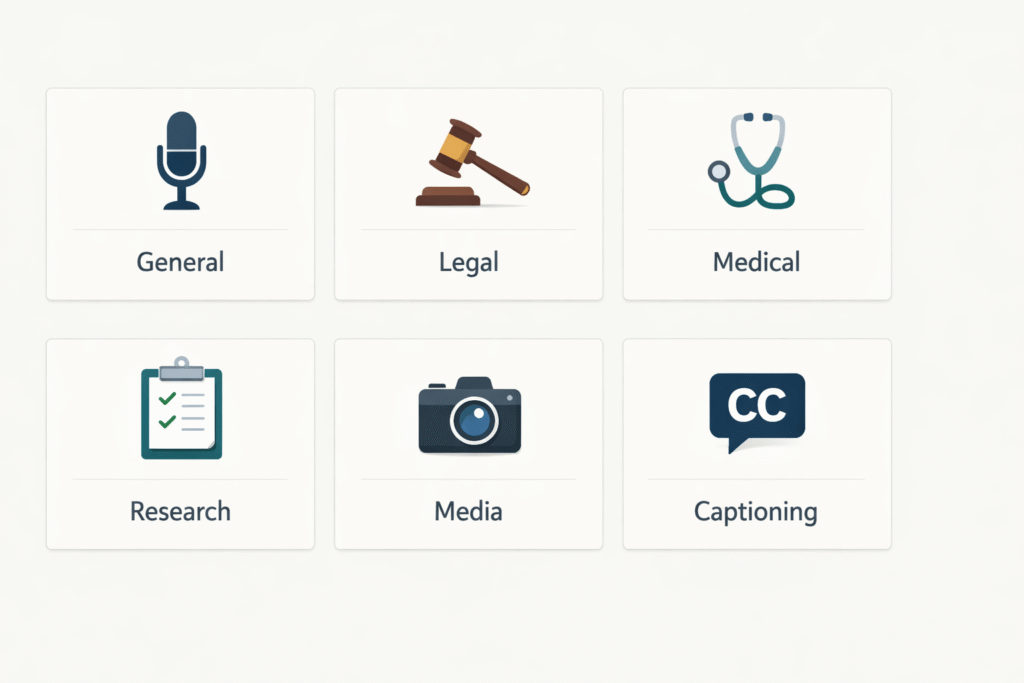
Not all transcription work is the same. Your pay, difficulty, and required knowledge change depending on the niche.
1) General transcription
Interviews, calls, webinars, meetings, podcasts.
Best for: beginners building speed and confidence.
2) Legal transcription (including court-related)
Depositions, hearings, solicitor/client meetings, police interviews, case conferences.
Best for: detail-oriented transcribers comfortable with confidentiality and formal formatting.
If you’re specifically searching how to become a court transcriber, read the dedicated section below—court work in the UK often has extra process steps and stricter handling.
3) Medical transcription
Clinical dictations, letters, reports.
Best for: people who can learn medical terminology and keep focus under pressure.
4) Academic and research transcription
Interviews and focus groups (often with verbatim rules and anonymisation).
Best for: careful listeners who can handle multiple speakers and messy audio.
5) Media transcription (TV, documentary, YouTube)
Production teams often want timestamps, speaker labels, and clean readability.
Best for: those who enjoy storytelling and tight deadlines.
6) Captioning and subtitling
Related to transcription, but with timing and character limits.
Best for: strong English editing and attention to timing.
7) Multilingual transcription
Transcribing in the same language as the audio (not translating).
Best for: native-level fluency, especially with accents and dialects.
If you want to expand from transcription into official document work later, it’s worth knowing the difference between transcription and certified translation. For official submissions (passport, DVLA, visa, legal filings), you’ll typically need certified translation services rather than transcription.
How much do transcribing jobs pay in the UK?
Transcription pay usually isn’t a simple hourly wage. Most roles pay by output or audio length, not by the time you spend.
The most common UK pay models
- Per audio minute (common for freelance platforms and agencies)
- Per audio hour (a bundle rate)
- Per word / per page (less common, usually specialist)
- Per project (meeting pack, webinar bundle, research set)
- Hourly (more common in employed roles like admin/audio typist work)
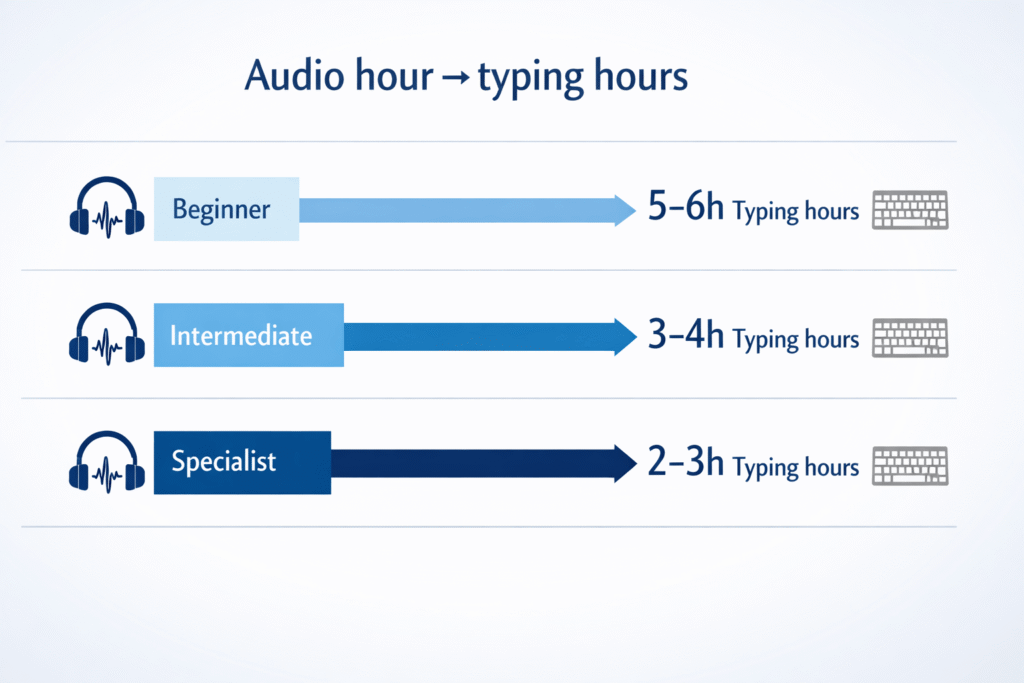
The reality: your “effective hourly rate” depends on speed
A beginner might take 4–6 hours to transcribe 1 hour of clear audio.
A strong transcriber might take 2–3 hours for the same file (or faster with excellent audio and tools).
Use this simple calculation:
Effective hourly rate = Project pay ÷ hours spent (including proofing)
Example earnings scenarios (illustrative)
| Scenario | Audio length | Pay method | Time needed | Effective hourly rate |
| Beginner, clear meeting | 60 min | per audio minute | 5 hours | moderate |
| Intermediate, podcast | 60 min | per audio minute | 3 hours | better |
| Specialist legal file | 60 min | premium rate | 3–4 hours | higher |
| Employed audio typist | n/a | hourly | fixed shift | predictable |
What raises pay fastest: specialising, improving speed, and choosing better clients (not just doing more hours).
If you’re currently doing low-paying tasks and wondering are transcribing jobs worth it, skip ahead to the “worth it” section—because it depends heavily on your niche and workflow.
What skills do you need for transcription work?
You don’t need a university degree to start, but you do need a professional skill stack.
Core skills clients and employers expect
- Typing speed + accuracy: aim for 60–80 WPM to start; higher helps a lot.
- Listening under pressure: accents, fast speakers, poor audio, interruptions.
- English mechanics: punctuation, grammar, clean formatting.
- Consistency: speaker labels, style rules, timestamps.
- Confidentiality: secure handling, discretion, good file hygiene.
- Time management: deadlines and batching.
Tools that make you faster (and protect your hands)
- Good closed-back headphones
- Foot pedal (optional, but a big speed boost)
- Transcription software (variable speed playback, rewind hotkeys)
- Text expanders (for recurring phrases, speaker labels)
- Ergonomic keyboard setup (your wrists will thank you)
If you need official-grade formatting for legal, immigration, or corporate use, looking at professional workflows used by UK transcription services helps you model real-world standards.
Are transcribing jobs legit? How to spot scams
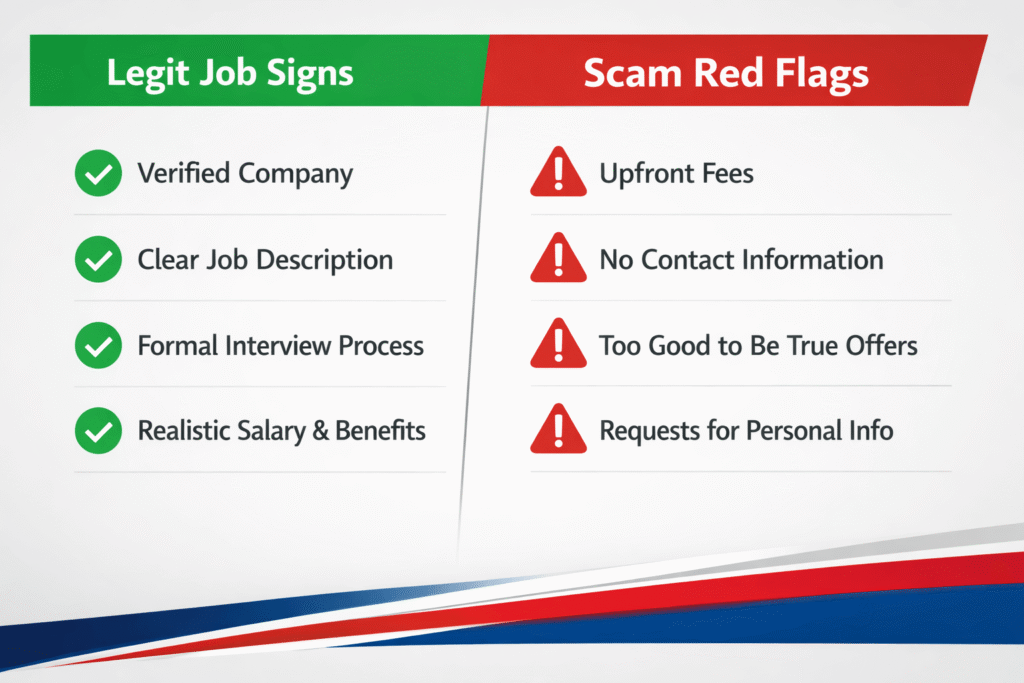
Yes—transcription is a real industry. But are transcribing jobs legit is a fair question because scammers target “remote work” keywords.
Green flags (good signs)
- Clear company identity, real website, real address, public reviews
- Transparent pay structure and payment terms
- Proper onboarding: NDA, style guide, secure portal
- Skills test that doesn’t ask for money
- Professional email domain (not random messaging apps as the only contact)
Red flags (walk away)
- “Pay a fee to start” / “pay for certification” / “pay to unlock tasks”
- Unrealistic promises (“£800/day for simple typing”)
- Pressure to move instantly to WhatsApp/Telegram for “onboarding”
- Requests for bank details or identity documents before a formal contract
- Vague job description, no sample outputs, no style rules
Rule of thumb: legitimate work may test your ability, but it won’t require you to pay to access earnings.
How to become a transcriber in UK (step-by-step)
If you’re starting from zero, the goal is simple: prove you can deliver accurate transcripts on deadline, securely.
Step 1: Set your baseline (1 day)
- Typing speed test (WPM + accuracy)
- A 5-minute transcription sample to see your real pace
- Identify your weak point: speed, punctuation, or listening
Step 2: Learn basic transcription rules (1–3 days)
- Clean vs verbatim differences
- Speaker labelling conventions
- Timestamp formats
- Common errors (homophones, numbers, names)
Step 3: Build 3 sample transcripts (1 week)
Create samples from public-domain audio (or your own recordings):
- one interview (2 speakers)
- one meeting (3+ speakers)
- one challenging audio (noise/accents)
Step 4: Choose your entry route (week 2)
Pick one:
- Employed route: audio typist/admin roles (predictable hourly pay)
- Agency route: consistent workflow, style guides, higher standards
- Platform route: faster entry, lower rates, variable quality
Step 5: Apply and improve (weeks 3–6)
- Apply weekly, track results, iterate samples
- Build a simple portfolio (PDF samples + “skills and tools” page)
- Ask for feedback and fix recurring errors
Step 6: Specialise (months 2–3)
Specialising is where pay improves. Pick one:
- legal
- medical
- research
- media/time-stamped production
Step 7: Treat it like a business (ongoing)
If you freelance, you’re running a small business:
- set turnaround rules
- track time per audio minute
- keep consistent file naming and storage
- plan for taxes and admin
If you want to work with clients who need accuracy and confidentiality standards similar to legal and official bodies, review how professional providers structure deliverables and security on the About page.
How to become a court transcriber (UK route)
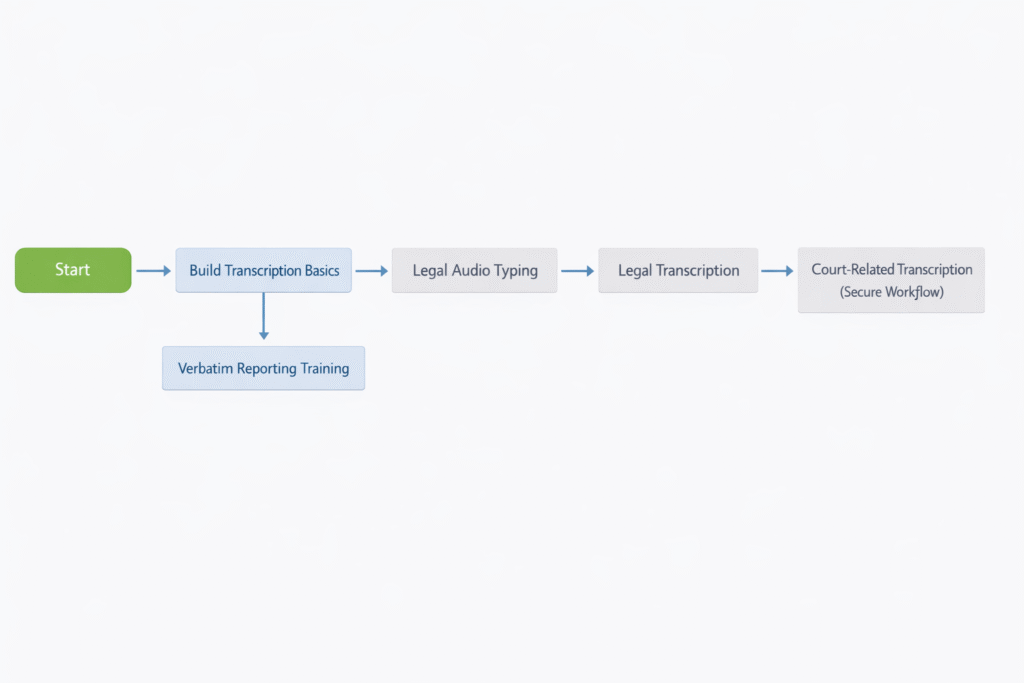
People often mean two different roles when they say “court transcription”:
- Court reporter / verbatim reporter (real-time capture, often with specialist equipment and accreditation)
- Court transcriptionist (turning recorded hearings into transcripts)
In the UK, official court and tribunal transcript requests follow specific processes, and transcript production is typically handled by authorised suppliers and specialist services—not casual freelancers.
A realistic pathway into court-related transcription
Option A: Start in legal audio typing / legal admin
- Gain experience with legal terminology, confidentiality, formatting
- Learn how case references, hearings, and names are handled
- Move into legal transcription via agencies and supplier networks
Option B: Train toward verbatim reporting
- This is a separate skill path (very high speed, specialist training)
- Best for those aiming for court reporting/captioning work
Option C: Join a transcription company that handles legal/court work
- You’ll often need: proven accuracy, NDA comfort, disciplined formatting
- Some roles may require background checks depending on the contract
Skills that matter most for court work
- near-perfect accuracy (names, legal terms, numbers, dates)
- strict verbatim rules when required
- consistent speaker labels (“JUDGE:”, “COUNSEL:”, etc.)
- strong confidentiality and secure handling
- calm performance on difficult audio
Practical tip: even if your long-term goal is court transcription, start by mastering clean meeting/interview files—then level up to multi-speaker, time-stamped legal-style work.
Where to find transcribing jobs (UK)
Here are reliable places to look—without relying on one single platform:
Employed roles (steady hours)
- NHS and healthcare admin roles (audio typing/clinical transcription)
- legal secretary and legal admin roles
- universities and research centres (project transcription)
- media production houses (post-production transcription)
Freelance and agency roles
- transcription agencies (general, legal, medical)
- court-authorised suppliers (via their recruitment channels)
- language service providers that also offer transcription (often higher standards)
Job boards and professional networks
- mainstream job boards for “audio typist”, “transcriptionist”, “legal transcription”
- LinkedIn + company career pages
- specialist communities (captioning, court reporting)
If your goal is freelance work, keep your portfolio short but sharp: 2–3 excellent samples beat 10 messy ones.
Are transcribing jobs worth it?
For many people, yes—but only when expectations match reality.
Transcription is worth it if you:
- enjoy focused work and detail
- want flexible hours
- can improve speed over time
- plan to specialise (legal/medical/research/media)
- want a skill that can lead to captioning, editing, or language services
It’s probably not worth it if you:
- hate repetitive listening
- struggle with grammar and formatting (and don’t want to improve)
- want high pay immediately with no learning curve
- need constant variety and social interaction
The tipping point for most people is workflow: once you reduce pauses, fix common mistakes, and use shortcuts, your effective hourly rate rises sharply.
Quality and confidentiality: the part beginners overlook

Transcription often includes personal data (names, health info, legal matters). Even small mistakes—like mishearing a dosage, a date, or a legal term—can matter.
Professional habits to adopt early:
- store files in one secure place (not scattered across devices)
- don’t share client audio in public tools without permission
- use strong passwords and device locks
- anonymise research transcripts when requested
- keep a consistent naming system to avoid mix-ups
For official or high-stakes uses, many clients prefer using established providers with secure workflows. If you need a transcript for legal, corporate, academic, or media use, you can request a quote via UK transcription services and get guidance on format, timestamps, and turnaround.
“Uploaded my file in minutes and got the signed PDF back the next day. Solid service.” — Emma B.
(Client feedback shared by UK Certified Translation)
When you should outsource instead of doing it yourself
If you’re doing transcription for your business (or you’ve been asked to provide a transcript for an official process), outsourcing can save time and reduce risk when:
- the audio is poor quality
- multiple speakers talk over each other
- you need strict verbatim or time-stamps
- it’s legal/medical/confidential
- turnaround is urgent
You can start with a quick message on the Contact page or go straight to transcription services to request a quote.
If you also need official document support (certified, sworn, notarised), these services are commonly used together:
Frequently asked questions
What are transcribing jobs?
Transcribing jobs are roles where you convert spoken audio or video into written text. Work can be verbatim, clean verbatim, time-stamped, or summarised depending on the client.
How to become a transcriber in UK with no experience?
Start by learning basic transcription rules, building 2–3 strong sample transcripts, and applying to entry-level roles (audio typist/admin) or beginner-friendly transcription platforms. Improve speed and accuracy, then specialise to raise pay.
How to become a court transcriber in the UK?
Court-related transcription typically involves specialist formatting, strict accuracy, and secure handling. A practical route is to build experience in legal audio typing or legal transcription first, then move into supplier or agency work that handles legal/court materials. Verbatim court reporting is a separate high-speed training path.
Are transcribing jobs legit?
Yes, but remote-work scams exist. Legitimate employers don’t charge “starter fees” or require payment to access tasks. Always verify the company, pay terms, and onboarding process before sharing sensitive details.
Are transcribing jobs worth it?
They can be—especially once your speed improves and you specialise. Beginners may earn less until they reduce time per audio minute. Specialisms like legal, medical, research, and time-stamped media work often pay more.
Do I need special equipment to start transcription?
You can start with a laptop and good headphones. A foot pedal and transcription software can significantly increase speed and reduce fatigue, but they’re optional at the beginning.